The latest Federal Budget has landed, and it’s packed with measures that could impact your wallet. Let’s break down the key points that matter most to everyday Australians.
Tax Cuts: A Small but Welcome Relief
The headline grabber is the personal income tax cut. While it might sound impressive, the reality is more modest:
- You’ll save up to $268 in the 2026-27 financial year
- This increases to up to $536 from 2027-28
Interestingly, the Australian Taxation Office is getting almost $1 billion to beef up its compliance programs. Translation? They’ll be keeping a closer eye on tax returns.
Potential Measures Still Hanging in the Balance
Two significant proposals are yet to clear Parliament:
- A new 30% tax on super earnings for balances over $3 million
- The $20,000 instant asset write-off for small businesses
These could easily fall through if not approved before the election, so stay tuned.
Budget Highlights Across Key Sectors
Energy Relief
- $180 billion allocated
- $150 energy bill rebate extended until end of 2025
Healthcare Boost
- $8.5 billion for Medicare
- 50 new urgent care clinics
- Bulk-billed GP services
- $1.8 billion for cheaper medicines
- $240 million for women’s health initiatives
Education Support
- 20% cut to HECS-HELP debt
- Revised student loan repayment schedule from July 2025
Housing Help
- $800 million to expand ‘Help to Buy’ scheme
- Government will co-buy to reduce home deposit requirements
Family Support
- Three days of subsidised childcare (income-tested)
- Replacing current Child Care Subsidy activity test from January 2026
A Bit of Lifestyle Cheer
- Beer excise frozen for two years (cheers to that!)
Economic Outlook: Cautiously Optimistic
The global economic landscape looks challenging:
- Trade tensions are creating uncertainty
- Australia’s economic growth expected to be slow but steady
- 2.25% growth in 2025-26
- 2.5% growth in 2026-27
Budget Deficit
- Projected at $42.1 billion for 2025-26
- Expected to improve slightly, but still in deficit
The Team
The Fortis Accounting Partners team are available to assist you to capitalise on any of the Budget measures or minimise your risk.
As always, the detail is important so please let us know if we can assist.

Henry Zhao, Partner
02 9267 0108
henry@fortisap.com.au

John Kalachian, Partner
02 9267 0108
john@fortisap.com.au
Individuals & families
“Modest” two stage personal income tax cut
From 1 July 2026
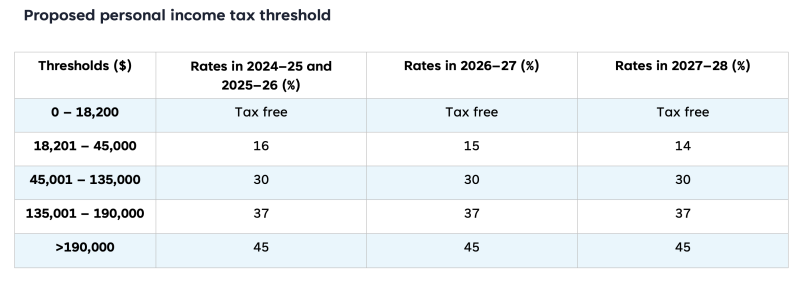
The Government will provide a “modest” tax cut to all taxpayers from 1 July 2026 and again from 1 July 2027.
The tax rate for the $18,201-$45,000 tax bracket will reduce from its current rate of 16%, to 15% from 1 July 2026, then to 14% from 2027-28 at a cost of $648m over four years.
The saving from the tax cut represents a maximum of $268 in the 2026-27 year and $536 from the 2027-28 year.
Resources
Fact sheet: Personal income tax cuts
Medicare levy thresholds increased for low-income earners
From 1 July 2024
The Medicare levy low-income threshold exempts low-income earners from having to pay the levy. From 1 July 2024, the threshold for the exemption will increase.
The change will mean low-income earners will pay less when they lodge their income tax returns for 2024-25.
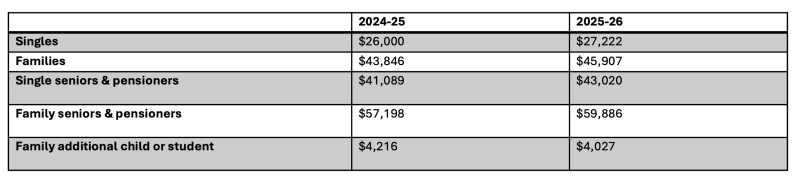
The threshold changes come at a cost of $648m over 5 years.
Announced $150 energy bill relief
From 1 July 2025
Households and small business will receive an additional automatic credit of $150 on their energy bills in quarterly installments between 1 July 2025 and 31 December 2025.
The extension of energy bill rebates will cost $1.8 billion over two years.
Resources
More energy bill relief for every Australian household and for small business
Foreign Resident CGT Changes Delayed
If you’re a foreign resident with investments in Australia, there’s been an update on upcoming tax changes that could affect you. The government had planned to introduce new Capital Gains Tax (CGT) rules from 1 July 2025, but these have now been delayed until at least 1 October 2025—and possibly even later, depending on when the changes pass through Parliament.
The proposed reforms aim to expand the types of assets that foreign residents must pay CGT on when they sell them. They would also tighten the rules around selling shares in companies or units in trusts. Additionally, foreign residents would be required to report high-value share or trust transactions (over $20 million) to the ATO before they happen.
If you’re a foreign resident investor, it’s important to stay informed about these changes. We’ll keep you updated as more details emerge.
Resources
ATO Strengthening the foreign resident capital gains tax regime
Announced 2 year ban on foreign ownership of established homes
From 1 April 2025, the Government has banned foreign and temporary residents, and foreign-owned companies, from purchasing established dwellings to prevent ‘land banking’. The ban applies for 2 years but is subject to some limited exceptions.
Resources
ATO Banning foreign purchases of established dwellings
MIT amendments delayed
The planned extension of the clean building MIT (Managed Investment Trust) withholding tax concession, originally set to start on 1 July 2025, has now been delayed. It will now take effect on the first 1 January, 1 April, 1 July, or 1 October after the law receives Royal Assent.
In addition, the government is making changes to clarify tax rules for MITs, ensuring that legitimate investors can still benefit from concessional withholding tax rates. These changes will apply to fund payments from 13 March 2025 and align with the ATO’s increased focus on preventing misuse in this area—see Taxpayer Alert 2025/1 for more details.
Business & employers
Non-compete clauses to be banned
From 2027
The Government has announced that it will ban non-compete clauses for low and middle-income employees (under the Fair Work Act high income threshold is currently $175,000). Non‑compete clauses are conditions in employment contracts that prevent or restrict an employee from moving to a competitor.
Back in April 2024, Treasury released an issues paper for consultation on Worker non-compete clauses and other restraints. The review stated that, “The direct consequence of a non-compete clause is that it hinders competition among businesses: it disincentivises workers from leaving their current job, creating a barrier to the entry of new businesses and the expansion of existing businesses.”
The Government is also make changes to competition law to prevent businesses from:
- Fixing wages by making anti‑competitive arrangements that cap workers’ pay and conditions, without the knowledge and agreement of affected workers.
- Using ‘no‑poach’ agreements to block staff from being hired by competitors.
Resources
Cracking down on non-compete clauses to boost wages and productivity
Announced Beer tax paused and benefits for wine and alcohol producers
August 2025 (beer excise)
1 July 2026 (other measures)
Indexation on the draught beer excise and excise equivalent customs duty rates will be paused for two years from August 2025. This just means that the price of beer won’t go up because of tax.
Support is also provided under the Excise remission scheme for manufacturers of alcoholic beverages increasing caps for all eligible brewers, distillers and wine producers to $400,000 per financial year, from 1 July 2026 (up from $350,000).
Resources
Albanese Labor Government to freeze draught beer excise
Government & regulators
Almost $1bn to the ATO for tax compliance
From 1 July 2025
The Government has set aside $999m over 4 years for the ATO to expand its compliance programs:
- Tax Avoidance Taskforce
- Shadow Economy Compliance Program
- Personal Income Tax Compliance Program
- Tax Integrity Program (medium and large businesses and wealthy groups)
The compliance programs are expected to deliver a threefold return of $3.2bn.
Australia’s Economic Outlook: A Comprehensive Overview
Economic Growth
- Slow but steady growth expected:
- 2025-26: 2.25% growth
- 2026-27: 2.5% growth
- Ex-Tropical Cyclone Alfred’s impact: Up to 0.25% reduction in GDP
Budget Deficit
- 2025-26 underlying cash balance: -$42.1 billion
- Debt trajectory:
- 2023-24: 18.4% of GDP
- 2025-26: Rising to 21.5% of GDP
- 2028-29: Projected to reach 23.1% of GDP
Employment Landscape
- Strong job market highlights:
- Over 1 million jobs created since May 2022
- Approximately 80% of new jobs in private sector
- Participation rate remains high
- Unemployment outlook:
- Expected peak: 4.25%
Wages and Income
- Real wages growth:
- Five consecutive quarters of growth
- Forecast 0.5% growth in 2024-25
- Wage Price Index (WPI):
- December 2024: 3.2% annual growth
- June 2025 forecast: 3% growth
- June 2026 forecast: 3.25% growth
Inflation Trends
- June 2025 inflation expectation: 2.5%
- Inflation moderation factors:
- Cost of living relief
- Declining petrol prices
- Electricity rebates
- Rent assistance indexation
Global Economic Challenges
- Increased trade tensions creating uncertainty
- Subdued global growth
- Tariff impacts:
- Indirect effects estimated nearly four times direct effects
- Significant trade flow implications between Australia, China, and US
- Potential retaliatory tariffs could further impact real GDP
Key Takeaway: Australia’s economy faces challenges but shows resilience, with modest growth, stable employment, and efforts to manage inflation and global economic uncertainties.